


A LIVING HISTORY OF

From its earliest days, Ascham has been shaped by the quiet generosity of its community. Across the decades, gifts have built the campus, opened doors for girls and embedded a culture of giving.
1886 – 1910


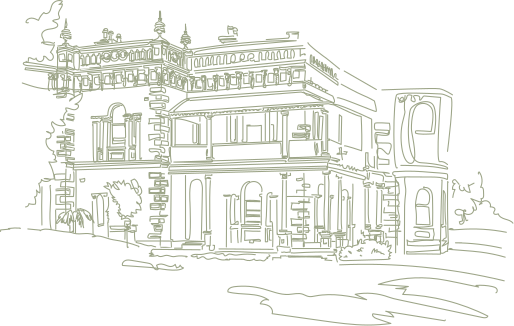
When Miss Marie Wallis opened the School in a modest Darling Point terrace in 1886, with just nine girls, she had no institutional backing. Instead, she relied on the confidence of those who believed in her vision. From the beginning, parents were Ascham’s first benefactors, providing the financial support needed to sustain the School’s fragile early years.
That confidence attracted others. Wealthy mining agent Samuel Levy Bensusan lent credibility by enrolling his daughter Inez, while landlord John Furlong Morgan enabled growth through additional space, allowing the School to expand and relocate to Delamere by 1893.
By 1899, support for the School was becoming a tradition. The formation of the Ascham Old Girls’ Union and the introduction of the Old Girls’ Prize reflected a growing culture of connection, loyalty and contribution.
In 1903, under Head of School Mr Herbert Carter, Old Girls endowed a cot at the Infants’ Home in Ashfield, one of Ascham’s first organised philanthropic acts. In 1908, the purchase of Glenrock by Mr and Mrs Carter secured the School’s permanent home, transforming Ascham from a collection of rented rooms into a lasting campus.
The pattern was already clear: when people believed in Ascham, they invested in its future.
1910 – 1930


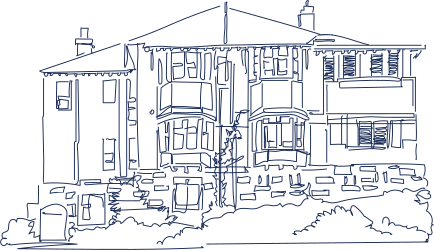
Under the leadership of Headmistress Miss Margaret Bailey, Ascham entered a period shaped by resilience, service and care. Through World War I and the Great Depression, giving became part of daily life.
Students played their part, raising funds for the Red Cross and knitting and sewing for servicemen overseas. Old Girls extended Ascham’s influence far beyond its gates. Rania MacPhillamy MBE OBE (1907) was instrumental in establishing the Soldiers’ Rest at Kantara, Egypt, in 1915, while Ursula Carter (1905) served as a nurse in Egypt before and after the Gallipoli campaign.
At home, Miss Bailey worked to ensure an Ascham education remained within reach. Fees were reduced or deferred where needed, allowing girls to continue their schooling despite financial hardship. Community support also enabled the acquisition of properties including The Knoll (now Macintosh House), while early scholarship-style assistance began to emerge. The Jubilee Fund of 1936 marked one of the School’s first organised efforts to provide financial support for students.
As Ascham grew, so too did the need to safeguard its future. In 1937, Miss Bailey made a visionary decision to formally incorporate the School under a Board of Governors. She sold the School to the Company and continued as an employee, ensuring continuity while placing Ascham on a secure and sustainable footing.
Prizes and awards expanded, recognising achievement and reinforcing a culture of contribution. Each generation was reminded that to benefit from an Ascham education was also to help carry its traditions forward.
Giving at Ascham had evolved from individual acts of generosity into something more enduring: stewardship of a community and responsibility for its future.
1940 – 1950


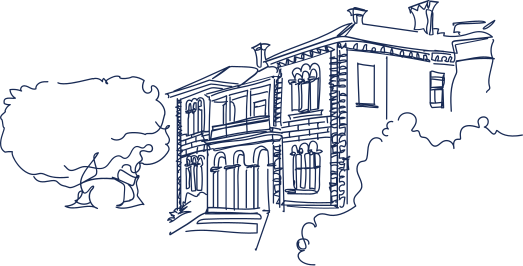
In the aftermath of World War II, the 1940s marked a turning point in Ascham’s history of giving. As Ascham approached its Diamond Jubilee in 1946, Miss Margaret Bailey launched the School’s first formal appeal: the Building and Development Fund. Her message was direct: ‘This will be the first occasion on which an appeal has been made for Ascham… for buildings, or the acquisition of more land, and for the development of the school generally.’
For the first time, giving was coordinated. Old Girls, parents and the wider community responded generously, creating the foundation for future expansion.
That momentum attracted transformational support. Neighbour Mr Albert Littlejohn’s bequest culminated in a £10,000 gift in 1948, allowing Ascham to buy Fiona and The Dower House.
The decade brought significant development. Community fundraising supported the construction of the War Memorial Hall and the Margaret Bailey Memorial Library, while scholarship and bursary funds, including the Dorothy Whitehead Memorial Bursary, ensured access expanded alongside infrastructure.
As giving became more organised, so too did community involvement. In 1953, the establishment of the Ascham Parents’ Association (APA) formalised the role of parents in School life, creating new avenues for engagement, fundraising and connection.
The first appeal proved what Ascham would demonstrate time and again: when a community unites behind a shared purpose, its impact can endure for generations.
1960s–1970s


By the late 20th century, Ascham’s culture of giving was well established, but it remained largely informal and responsive rather than planned. The acquisition of properties such as Hillingdon in 1964 and Holmwood in 1968 expanded the School’s footprint and highlighted the need for a more coordinated approach to growth.
That shift came in 1977 with the establishment of Ascham Foundation. For the first time, philanthropy was guided by long-term vision. What had once been instinctive became strategic, with giving aligned to priorities that would shape both the School’s buildings and the girls who would learn within them.
The impact was immediate. Targeted appeals invited support for the Building Fund, Library Fund, Scholarship Fund and Endowment Fund, giving donors clear pathways to invest in Ascham’s future.
Those investments translated into visible progress. Building Fund support strengthened boarding facilities, while the Fund for Ascham helped renew Glenrock and Fiona, preserving heritage buildings while adapting them for contemporary use.
At the same time, scholarship and bursary programs became more intentional. Access to an Ascham education became a defined philanthropic priority.
The establishment of Ascham Foundation gave structure to a century of generosity, laying the groundwork for the major campaigns and philanthropic growth that followed.
1980–1990


The 1980s marked a defining decade for Ascham. Under the leadership of Headmistress Mrs Rowena Danziger, the School received an extraordinary gift from the Packer family, one that transformed both the campus and access to education.
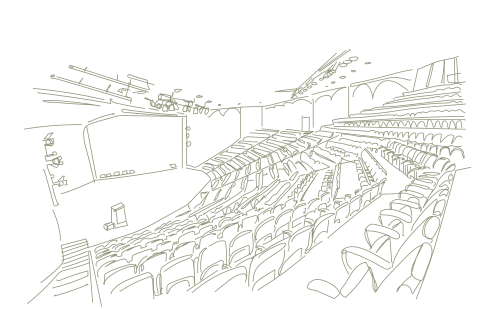
Opened in 1988, the Packer Theatre became a focal point of School life, hosting assemblies, performances and community events.
Alongside it, the Packer Scholarship opened Ascham’s doors to girls from rural and financially disadvantaged backgrounds. Covering both tuition and boarding, it enabled 36 students over nearly three decades to access opportunities they might otherwise never have had.
The impact was far-reaching. Packer Scholars went on to distinguished careers in medicine, law, defence and community service, demonstrating the life-changing potential of education when access is expanded.
Ascham’s Centenary celebrations in 1986 reflected that same spirit of contribution. The book Ascham Remembered 1886–1986 was published, detailing the School’s history and featuring contributions by Old Girls. Its proceeds were intended to support the School’s future needs.
The Packer family’s philanthropy showed that the most enduring gifts create both opportunity and belonging.
This decade demonstrated the power of investing in both people and place.
1990 – 2019


With Ascham Foundation firmly established, philanthropy became increasingly strategic. The introduction of the Futures Fund enabled the School to invest in both long-term priorities and emerging opportunities.
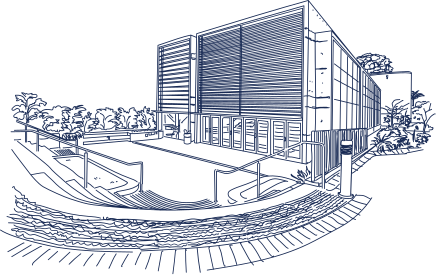
In 2006, the Building Futures campaign launched a new phase of campus development. Despite the challenges of the global financial crisis in 2008, the community responded with determination. By 2010, the Hillingdon precinct had been transformed, with new classrooms, Hillingdon Hall (later renamed the Louise Robert-Smith Hall) and the Helen Grant Library creating contemporary learning environments for future generations.
This momentum laid the foundation for the Duntrim Campaign. Guided by the vision of Building Our Girls’ Future, the campaign raised more than $8.5 million between 2012 and 2016, with the support of over 400 donors. It delivered the Centre for the Sciences and restored Duntrim House as a Boarding House.
Philanthropy also left a lasting mark through individual acts of generosity. A bequest from past parent Joan Barnet made possible the Barnet Lecture Theatre, while the Belgiorno-Nettis family’s 2016 gift created the Belgiorno-Nettis Languages Centre and established four Belgiorno-Nettis Diversity Scholarships.
By the end of this period, philanthropy had become a powerful force in shaping both the campus and the student experience.
Ascham’s giving culture had reached a new level of maturity: strategic, collaborative and focused on future generations.
2020–2025


In 2020, the COVID-19 pandemic disrupted School and home life and placed financial strain on many families. In response, Ascham Foundation and the APA established a Hardship Fund, providing immediate support and ensuring continuity of learning. Giving was swift, personal and grounded in care for the community.
A new chapter followed in 2021 with the introduction of Giving Day. In its first year, 391 donors contributed more than $390,000 in a single day. Since then, it has become an annual tradition, engaging hundreds of donors each year and funding four scholarships annually.
At the same time, the Scholarship Program expanded significantly. New and existing scholarships, including the Eureka Benevolent Foundation Scholarship, the Louise Christie, Koppel Johns and Rowena Danziger Scholarships, broadened access and strengthened Ascham’s commitment to inclusion.
Legacy giving also shaped this era. Past student Jiu-Hwa Lo’s (1955) endowment for the Ngara Scholarship represented the largest scholarship gift in Ascham’s history since the Packer Scholarships. Her donation supports Indigenous students and helps embed First Nations perspectives into an Ascham education.
In 2025, the Katina Barrack Endowed Scholarship, established by Sebastian Barrack in honour of his mother, Old Girl Katina Barrack (1964), continued this tradition of transformational giving.
Even in times of change, giving continues, ensuring that opportunity remains at the heart of the School.
2026


Launched on Giving Day in Ascham’s 140th year, the Ascham Community 140 Years Scholarship represents the next chapter in a tradition that began with the School’s earliest benefactors. Created as an endowed scholarship in perpetuity, it will support one girl every six years through her full secondary education—generation after generation.
This scholarship is a collective investment in opportunity. It honours those who came before while ensuring future girls can benefit from an Ascham education.
That same spirit continues to shape School life today. Through fundraising initiatives, creative events and community partnerships, students support organisations including Days for Girls, the Sydney Children’s Hospital Foundation, Dance for Sick Kids, Hope in a Suitcase and Our Big Kitchen, developing empathy, leadership and social responsibility through service.
Looking ahead, Ascham’s culture of giving will continue to shape the School’s future. The Masterplan reflects a sustained commitment to enhancing infrastructure and supporting a more sustainable, inclusive and progressive School community.
From the first families who believed in Marie Wallis, to the Old Girls who rallied in times of need, to the donors and volunteers shaping the School today, every generation has helped build something greater than itself.
And it continues…with heart and soul.
